https://www.abeneth.com/a-mindful-home-the-ultimate-guide-to-decluttering-storage-and-design/
Introduction: Why does “throwing away things” make people so anxious?
We all know the importance of keeping a tidy space: less is more, and a clean environment is more conducive to thinking and living efficiency. But when it comes to really taking effect, we are often held back by a small stumbling block:
“Although this dress has never been worn, it is very expensive.”
“I should have read this book a long time ago.”
“Maybe this packaging box will be useful someday?”
Research shows that more than 85% of people experience distress and inner dysfunction when it comes to purging. Whether you’re a die-hard Marie Kondo fan or you fail at spring cleaning every year, there’s a very specific, even quantifiable mechanism behind this.
This article will take you into the psychological basis of “reluctance to throw away” and provide a set of practical countermeasures based on psychotherapy design to help you not only clear up space but also release psychological burden.
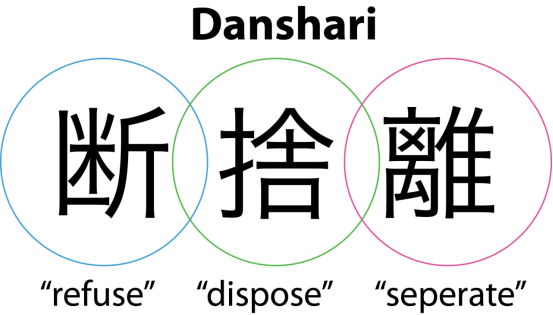
1. 6 psychological reasons why you cannot do Danshari
1. Once you own something, you become “noble”: Endowment Effect
Ala discovered that people automatically give higher value to things they already have.
Nobel Prize winner Richard Thaler once participated in an experiment in which participants were asked to value an ordinary coffee cup – those who owned it gave an average of twice as much as those who did not own it.
Reply to daily life: That coat that you obviously don’t wear, but you just can’t bring yourself to buy it because it’s “very expensive”.
2. Your brain is more afraid of losing than you are: Loss Aversion
Economic research shows that people’s pain of “losing” is mostly multiples of considering “gaining”.
So, when you lose something, your brain will immediately light up an “alarm”: what if you need it in the future?
Common self-talk:
“It would be a waste to throw it away.”
“Maybe it’ll come in handy someday?” (But that day never came)

3. Things are “bound” by emotions: Emotional Attachment
Objects don’t just record things, they record emotions.
A notebook from your college days, your kids’ childhood doodles, a scarf from an ex — the memories they evoke are more powerful than their actual use.
Neuroscience shows that such emotions activate the hippocampus and prefrontal cortex of the brain – this is not “fetishism” but “memory at work.”
4. Stuff is part of your identity: Self-extension
We see certain objects as extensions of ourselves. The old textbooks you keep may symbolize your identity as an “intellectual”; the fitness equipment piled up in the square may represent the “athletic persona” in your mind.
Sometimes, letting go of these things is as difficult as admitting that I’m not that person anymore.
5. Too many decisions, and your brain gets tired: Decision Fatigue
Judgment is significantly reduced during the cleanup process.
The end result is usually:
Debt → “I’m too tired, I’ll talk about it tomorrow.”
Escape → “Pack all and put aside for now.”
6. Fear of future scarcity: Scarcity Mindset
If you’ve ever had a childhood of scarcity or grown up during economic hardship, you may have a particular fear of “losing something,” even if it’s useless.
Typical manifestations:
Keep all bags, boxes, and “small parts that might be used”
Repeat purchase of existing items, “someday no more”

2. Why is it so difficult to lose things? From the perspective of the brain
fMRI (functional brain scan) studies have revealed an interesting fact:
When you throw something, the anterior cingulate cortex of your brain becomes active – this means you are experiencing “psychological conflict”;
Insular stress produces a “physiological imbalance” response;
At the same time, dopamine system activity decreases and you don’t feel any “reward.”
To summarize:
You’re not lazy or irrational—your brain is really reacting to discarding the same way it did before.
Danshari Scientifically : 5-step Psychological Method
Step 1. Change the way you ask = change your thinking process
Replace “Don’t throw it away?” with “Is this thing worth the effort it takes to fill my limited living space?”
This is called cognitive reframing, and it’s an effective way to break down emotional resistance.
Step 2: Sentiment Segmentation Techniques
Preliminary archiving : Take a photo of the wallpaper before throwing it away to keep a record of what needs to be done.
Let go with gratitude : Say “thank you for being with me” to the item and then let it go.
This is not mysterious—it has been shown to be effective in many cognitive behavioral therapies.
Step 3. “Exposure therapy” clean-up challenge: desensitization in stages
Use the 21-day phased “brain” to adapt to loss:
| stage | time | Task |
| 1 | Days 1-7 | Clearing garbage obviously |
| 2 | Day 8-14 | Clear out items you haven’t used in two years |
| 3 | Day 15-21 | When dealing with emotionally charged items |
Step 4. Set boundaries: Create space to help make decisions
Limited storage space, for example, wallpaper can only fit into one storage box;
The wardrobe follows the principle of “one in, one out”. When you buy a new piece of clothing, you get rid of an old one.
This is called a “physical restriction strategy” and it can reduce selection pressure.
Step 5. Give your brain a little sweetness: the reward system
Instant feedback : After each box is cleaned, reward yourself with an experiential activity (such as watching a movie or taking a bath);
Visual sense of accomplishment : Take “comparison pictures” to enhance the sense of pleasure after cleaning.
The dopamine system loves a sense of accomplishment—use it for good things.
Conclusion: From “reluctant to give up” to “willing to give up”
Jordan Foucault once said, “True freedom is saying no to things you don’t need.”
Danshari is not only about clearing space, but also an exercise in reclaiming the power to choose one’s life.
Today’s challenge:
Find something that you know you should get rid of but have been putting aside.
Use the “5-second rule” to pick it up → bag → get rid of it.
Then, record your psychological feelings.
What kind of things are the hardest for you to throw away? Feel free to share your Danshari story in the comments section to let more people know that we are not alone.
https://www.abeneth.com/a-mindful-home-the-ultimate-guide-to-decluttering-storage-and-design/