https://www.abeneth.com/the-ultimate-home-organization-guide-master-storage-solutions-for-every-space/
I. Why it’s worth putting some effort into organizing the garden tool shed
The garden shed is often the most overlooked yet most burdensome place in the house. Tools, fertilizer, seeds, gardening supplies… with so many things, it gets cluttered faster than you imagine. If it’s not organized regularly, not only will the tools’ lifespan be shortened, but dampness and mess can also attract insects, making it increasingly difficult to use. Therefore, properly organizing these tools is a crucial step in creating a beautiful garden .
Simple tip: Lifting items off the ground and using hooks and shelves can significantly improve space utilization. Simple, but effective.
II. Preparation before starting: Cleaning + Planning = Twice the result with half the effort
1. Clear out first, then declutter.
The problem with most garden sheds isn’t “too much stuff,” but rather “too many broken things you can’t bear to throw away.”
After clearing out the tool shed, divide all items into three categories: keep, donate, and trash.
If you haven’t touched a tool in two years, you probably won’t need it again. Be decisive, and the space will feel much more comfortable.
2. Functional Zone Planning: The clearer the zoning, the better it is to use.
Divide the area according to tool type and usage priority. For example:
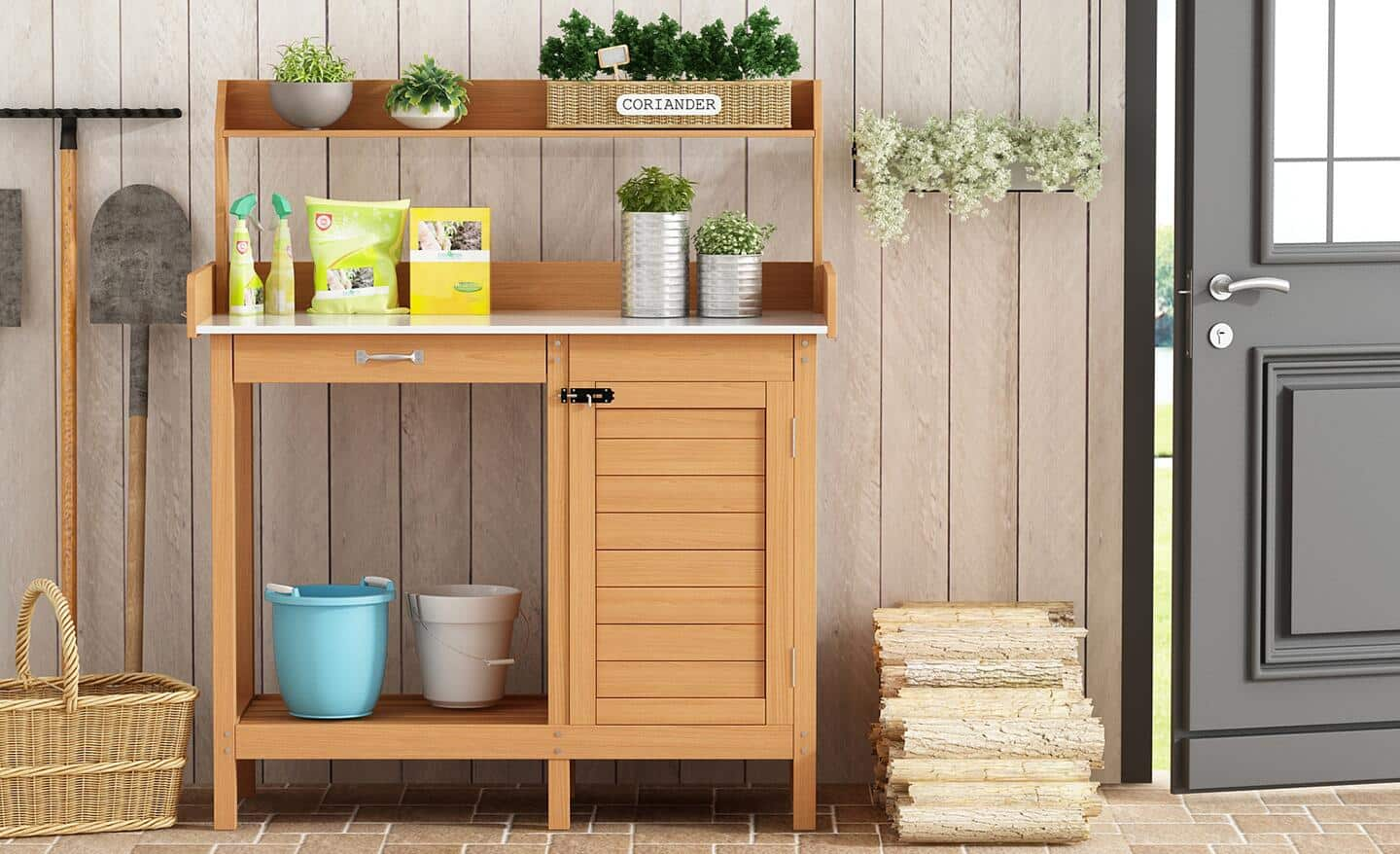
A sowing/repotting area (potting bench)
A heavy tool area (rakes, shovels, etc.)
Seasonal tool area
This will make your garden workflow much smoother, so you don’t have to spend ages rummaging through piles of clutter every time.

III. Efficient Strategies for Keeping the Tool Room Organized
1. Vertical Space: More Important Than You Think
There’s never enough floor space, so we have to “send” things onto the walls.
Hooks & Hangers : Hang all long-handled tools (rakes, shovels, hoes).
Pegboard : Suitable for small tools such as scissors, hand shovels, and screwdrivers.
Gravity Grabber : Automatically clamps tools, regardless of handle size, truly a lazy person’s dream.
2. Shelving: Heavy objects need a stable place to rest.
Open shelves are perfect for a garden shed, used to store:
Place heavy objects such as soil bags and sprayers at the bottom.
Seeds, small tools, and other commonly used items (middle layer)
The higher areas are reserved for lightweight, seasonal items.
3. Categorized storage + clear labels: Saves time and effort
Use transparent or labeled plastic boxes (totes/storage bins) to organize storage.
Small items (strings, seeds, gardening labels) are less likely to get lost if placed in small drawers, trays, or small cloth bags.
4. Flexible movement: Scrolling and DIY can both come in handy.
Rolling carts : Ideal for mobile operations. Simply push them back to the tool shed
after use. Reuse old materials : wooden pallets for tool racks, PVC pipes for tool troughs – both are very practical.
Bungee cords : Used to secure soft, lightweight items across walls or ceilings.
5. Safety & Maintenance
Fertilizers, pesticides, and other chemicals should be stored in sealed plastic containers and labeled.
For rust prevention of metal tools: after cleaning, soak them in dry sand with a little oil (WD-40 or linseed oil).
Hang with the sharpest tool facing upwards to ensure it is locked in place.

IV. Seasonal Management: Tool Rooms Also Need Seasonal Changes
Tidying up the garden shed is not a one-time task. It changes with the seasons:
Create a seasonal tool zone : seeds and scissors for spring, shovels and salt bags for winter.
Put off-season tools in labeled storage boxes, placing them in high places or corners.
Prepare a quarterly checklist to regularly remind yourself to adjust the layout.
This method can reduce the annoyance of “seasonal chaos”.
V. Creative and Money-Saving Storage Methods
Old wooden pallets on the wall : instantly create a long-handled tool rack.
Repurposed scrap metal cans : perfect for screws, ropes, and small parts.
Tool belts on the wall : easy to access and portable for gardening.
These are all low-cost but very practical ideas.
6. Avoid these common storage pitfalls
A tool shed placed in a damp, poorly ventilated location is prone to mold and rust.
Saws and hammers haphazardly piled up pose significant safety hazards.
Chemicals, seeds, and tools stored together are dangerous and difficult to find.
A layout that is too “fixed” is completely unsuitable when changing seasons.
Some mistakes aren’t big problems, but they can still waste your time.
VII. Practical Summary: Keeping the Tool Room Clean and Functional
Regular cleaning : At least once a year.
Zoning design : Frequently used areas, work areas, and seasonal areas should be clearly distinguishable at a glance.
Vertical storage : hooks, pegboards, and Gravity Grabbers free up floor space.
Flexible storage : Rolling work carts, DIY projects, elastic ropes, etc. can all significantly improve efficiency.
Clear categorization : Storage boxes + labels make everything “findable in seconds”.
Moisture control & safety : Keep well-ventilated and keep hazardous materials separate.
https://www.abeneth.com/the-ultimate-home-organization-guide-master-storage-solutions-for-every-space/